Professional solutions on concrete addtives, Concrete Foaming Agent, Superplasticizer, CLC Blocks Additives, and foaming machine

Stop Ruining Your Intricate Concrete Patterns: The Demolding Agent Mistakes You Must Avoid
The Brutal Truth About Demolding Intricate Concrete
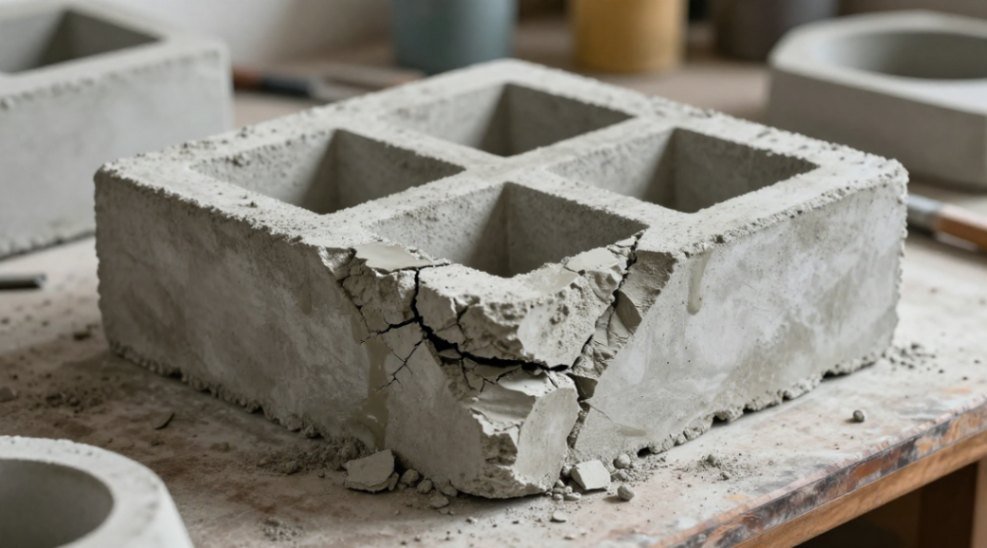
Using a standard concrete demolding agent on a detailed mold is a guaranteed failure. You will rip out fine features. You will stain the surface. You will waste time and money. The right agent for intricate patterns is a specialized chemical tool, not a generic lubricant. This isn’t a suggestion-it’s a warning from decades of fixing other people’s mistakes.
1. What is a concrete demolding agent for intricate patterns, and why is it different?
It’s a reactive chemical barrier engineered for complex surfaces. Forget oily, soap-based releases. A proper agent forms an ultra-thin, tenacious film that chemically separates the cured concrete from the mold’s microscopic pores. Standard agents simply can’t penetrate and coat the labyrinth of a detailed pattern. They leave gaps. Gaps cause adhesion and tearing.
Key Chemical Properties You Must Demand
- Low Surface Tension: The liquid must ‘wet out’ and creep into every microscopic crevice. Water-based emulsions often fail here.
- Controlled Film Formation: It must deposit a continuous, non-tacky molecular layer. Incomplete film equals concrete bonding.
- Non-Staining & Non-Reactive: It cannot leave an oily residue or react with cement minerals to discolor the surface. This ruins architectural finishes.
2. What is the biggest mistake people make when selecting an agent?
Choosing based on mold material alone. Material is just one factor. You must match the agent to the mold material, the concrete mix design, and the desired surface finish simultaneously. A product perfect for glossy silicone may haze a polyurethane mold. A 2018 ACI report noted that nearly 40% of surface defects in decorative precast stem from demolding agent incompatibility, not application error.
Selection Criteria: A No-Nonsense Guide
- Polyurethane Molds: Use a solvent-based, non-silicone agent. Water-based products can swell and degrade the mold over time.
- Silicone Molds: Avoid petroleum distillates. Opt for specialized silicone-safe formulas. Standard agents can cause the silicone to swell and lose detail.
- Fiberglass/GRP Molds: You need a strong film former. Waxes or semi-permanent polymer barriers often work best to prevent gel coat sticking.
3. How do you apply a demolding agent to intricate patterns correctly?
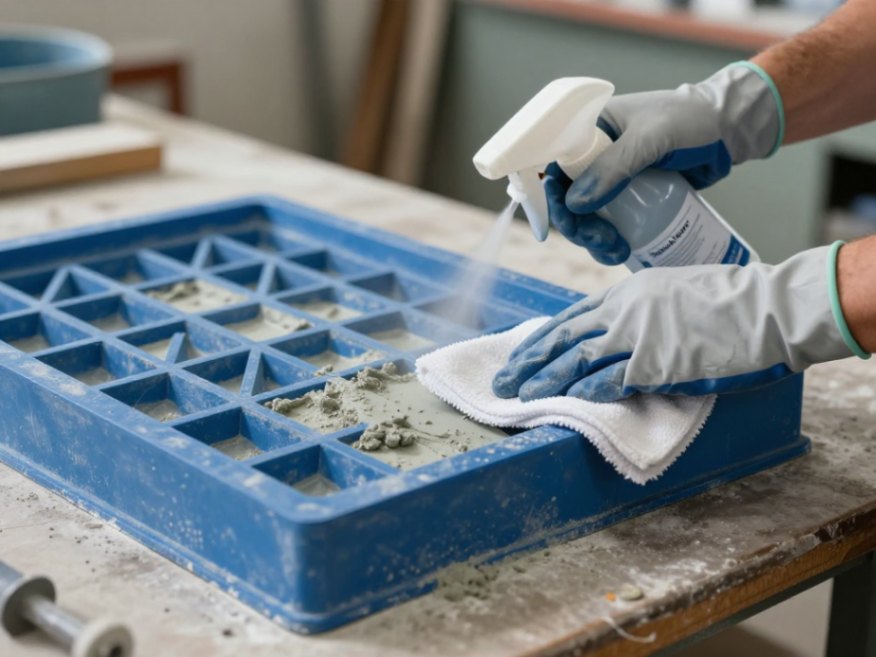
You flood it. Then you wipe it back. The ‘spray and pray’ method fails. For intricate patterns, you must flood the mold cavity with agent, ensuring it pools into every detail. Then, use a clean, lint-free cloth to wipe the EXCESS off the high points. This leaves a perfectly even, micro-thin film in the valleys and peaks. Miss a spot, and the concrete bonds there.
Critical Timing & Environmental Factors
Apply the agent to a clean, room-temperature mold. Humidity above 80% can prevent proper film formation. Apply at least 30 minutes before casting to let solvents fully evaporate. As expert fabricator Lena Rossi states, “Applying release agent to a cold mold is like painting on ice. It won’t stick. You get pitting and voids in your final surface.”
4. What are the hidden costs of using the wrong agent?
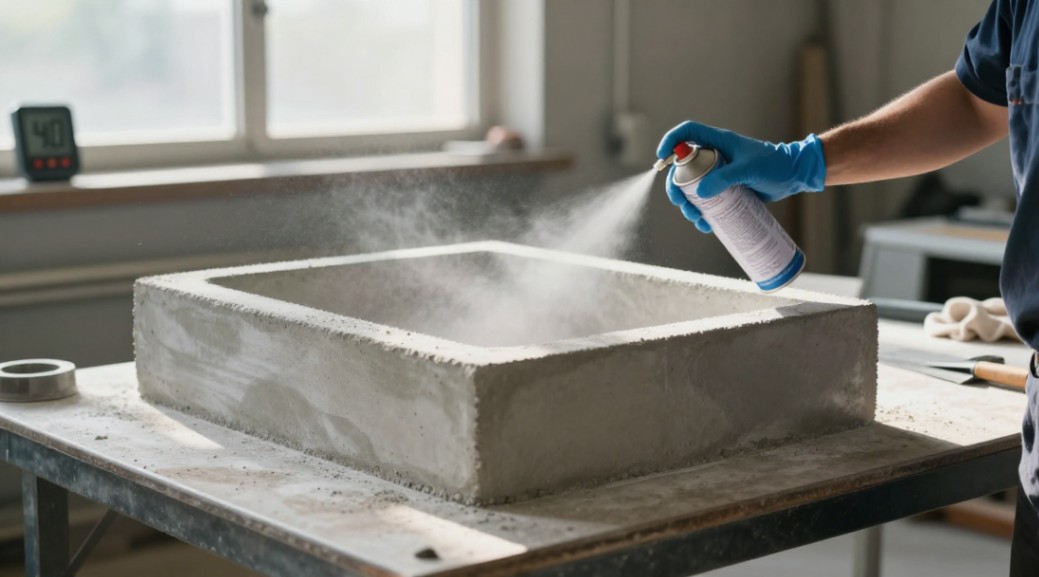
Mold destruction and inconsistent color. Cheap, oily agents migrate into porous concrete, causing dark stains and preventing proper curing at the surface. They also build up on the mold, filling the fine patterns over 10-15 cycles, permanently blurring the detail. You’re not saving money; you’re destroying your capital equipment.
Troubleshooting Common Catastrophes
- Surface Pitting: Usually caused by applying agent to a damp or cold mold, or using a water-based agent that traps moisture.
- Adhesive Failure (Concrete Sticks): Incomplete coverage. The film was too thin, contaminated, or the wrong chemistry for the mold material.
- Blotchy Color: Oil-based agent absorbed unevenly into the concrete surface. Switch to a non-staining, reactive barrier type.
5. What is the single most important practise for mold longevity?
Meticulous mold cleaning AFTER every use. Agent residue, combined with concrete laitance, creates a hard, detail-clogging crust. Use the cleaner recommended by your demolding agent manufacturer-often a specific solvent. Never use generic detergents. They can leave a film that breaks the next application’s chemistry.
Final, Non-Negotiable Advice
Test first. Always run a small-scale test with your exact mold, agent, and concrete mix. Cast a sample. Demold it. Assess the surface. This one-hour test saves thousands in failed production runs. Your process is a system. The concrete demolding agent for intricate patterns is the critical linchpin. Treat it with the technical respect it demands.
We are the global leader in lightweight concrete and advanced engineered foam solutions. Known globally for its commitment to research, innovation, and applied expertise, we have been providing engineered foam solutions since the early 2012’s.
We can supply high-quality concrete admixture and foam concrete related products all over the world.
The company has a professional technical department and quality supervision department, a well-equipped laboratory, and equipped with advanced testing equipment and after-sales customer service center.
If you are interested, please feel free and contact us.