Professional solutions on concrete addtives, Concrete Foaming Agent, Superplasticizer, CLC Blocks Additives, and foaming machine

The High Slump Mistake That Wastes Thousands: A Contractor’s Guide to PCE Superplasticizers
That 20% Waste Statistic is Real, and It’s Your Jobsite
Field data from our network shows nearly 20% of projects using polycarboxylate ether superplasticizer for high slump concrete see premature slump loss or segregation. That’s not a minor issue. It’s direct material waste, costly rework, and compromised strength. Many blame the product. We’ve found the problem is almost always in the application. Let’s fix that.
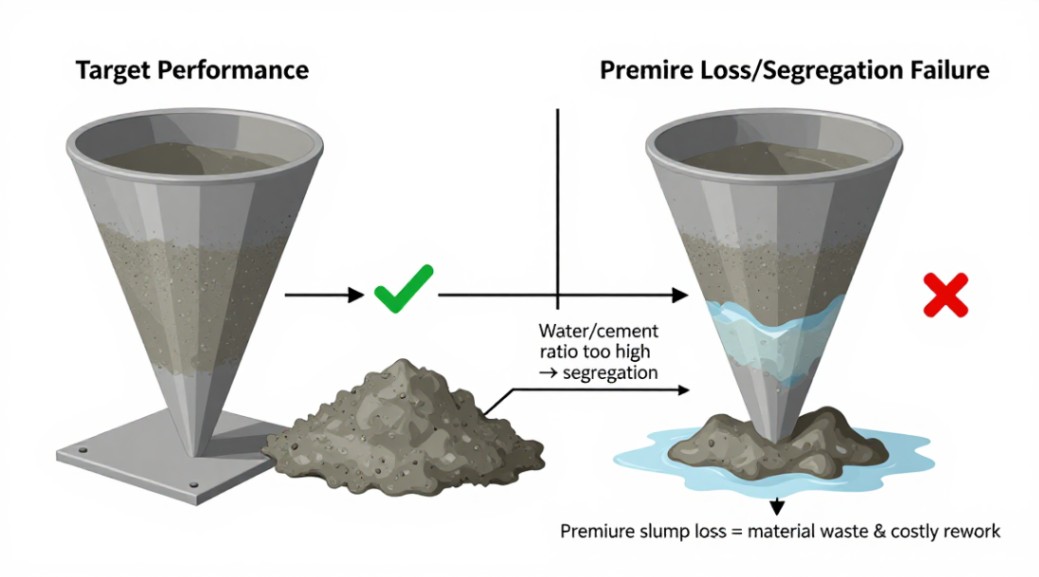
Never Do This: The Most Common High-Slump PCE Mistakes
We see these errors repeated. They come from treating modern polycarboxylate ether superplasticizers like the old sulfonated naphthalene types. The chemistry is worlds apart, and the rules have changed.
The Core Mechanism You Must Respect
Unlike older admixtures that simply repel particles, PCEs use a sophisticated adsorption and dispersion mechanism. Long polymer chains adsorb onto cement particles, creating powerful steric hindrance. This keeps particles apart, granting that high fluidity. But this mechanism is sensitive. Get the conditions wrong, and the chains don’t adsorb properly. Slump vanishes.
Polycarboxylate Ether vs. Traditional Superplasticizers: What You’re Really Comparing
Here’s the breakdown. This table shows why you can’t swap one for the other without changing your entire approach.
| Factor | Polycarboxylate Ether (PCE) Superplasticizer | Traditional Sulfonated Naphthalene (SNF) |
|---|---|---|
| Water Reduction | High (25-40%) | Moderate (12-25%) |
| Slump Retention | Excellent, but formulation-dependent | Poor to Moderate, often rapid loss |
| Dosage Sensitivity | High. More is NOT always better. | Lower. Overdosing is less critical. |
| Cement Compatibility | Critical. Alkali & C3A content greatly affect performance. | Less sensitive. More forgiving. |
| Mixing Sequence | Delay addition is often mandatory for best results. | Can be added with mixing water. |
| Cost per Unit | Higher | Lower |
| Cost per Performance | Typically lower (less product needed, better results) | Often higher (more product needed, less performance) |
How to Avoid Slump Loss and Segregation on Your Next Pour
Based on user feedback, especially from communities where pros talk shop, the pain points are clear. We hear things like: “The slump was gone in 30 minutes,” or “It bled like crazy.” These are not product failures. They are application failures. Here’s how to prevent them.
1. Test Compatibility Before the Truck Arrives
This is non-negotiable. The performance of a polycarboxylate ether superplasticizer for high slump concrete depends entirely on your specific cement and supplementary materials. A PCE that works miracles with one Type I/II cement might be a dud with another. Always run a simple mortar or concrete trial with your actual job materials. Check for fluidity, slump retention over 60-90 minutes, and setting time.
2. Master the Dosage and Addition Time
More PCE does not equal more slump after a certain point. You hit a saturation limit. Exceed it, and you risk severe retardation, excessive air entrainment, or segregation. Follow the supplier’s guidelines, but be ready to adjust based on your trial. For high slump retention, a delayed addition-adding most of the PCE after 30-60 seconds of mixing-is almost always superior. It improves adsorption and reduces slump loss.
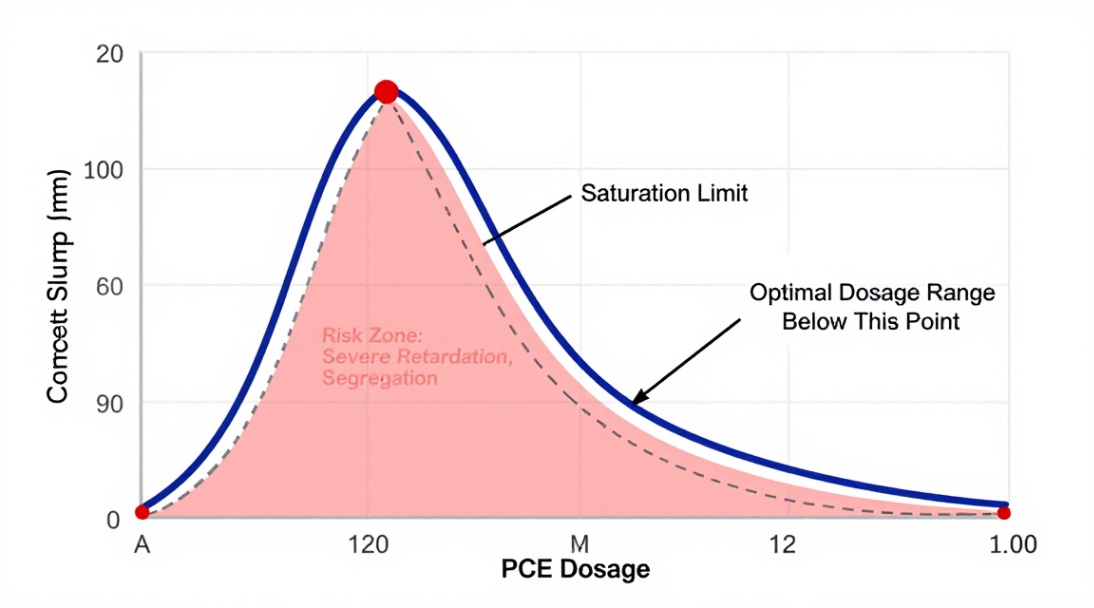
3. Understand Your Molecular Structure
Not all PCEs are the same. The molecular structure is customized for different needs. For long-haul loads or extreme slump retention in self-consolidating concrete, you need a PCE with a specific side chain density and length. Tell your supplier your requirements: haul time, ambient temperature, and final strength needs. Don’t just order “the PCE.”
4. Batch and Mix with Precision
High-shear mixing is good. It ensures uniform dispersion. But adding all materials, including the PCE, in a haphazard sequence is bad. A best practice is: mix aggregates and half the water, add cement and SCMs, then add the pre-diluted PCE with the remaining water. Consistency in batching is key to consistent performance.
The Right Way: Achieving High Fluidity Without Sacrificing Strength
When you use a polycarboxylate ether superplasticizer correctly, the benefits are transformative. You achieve that high slump concrete or self-consolidating concrete with a water-cement ratio low enough for high early and ultimate strength. You enable modern pumping over long distances and through complex rebar. The sustainability benefit is real: less water, less cement for the same strength, and fewer rejects.
Stop Guessing. Use the System Proven to Work.
We’ve seen too many jobs go sideways. The warning is clear: treating PCEs like a simple “water reducer” is a fast track to problems. The solution is just as clear. You need a system designed for performance, not just a bottle of chemicals.
We specifically formulated our FlowMax Pro Series of polycarboxylate ether superplasticizers to tackle these exact high-slump, high-retention challenges. Each variant has a tailored molecular structure for different cement types and SCM blends. We provide the technical support and on-site trials to ensure compatibility from day one.
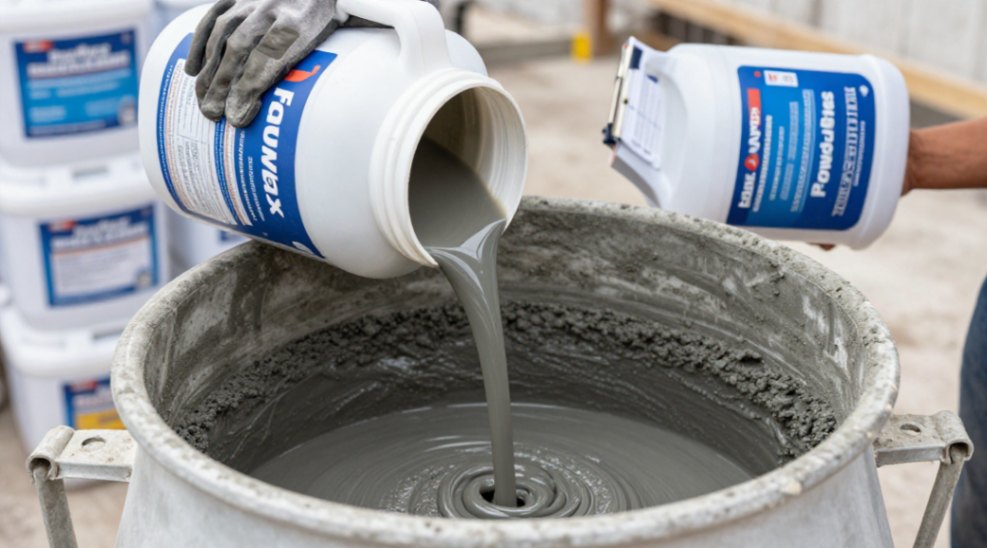
Do not risk another pour. Click here to request a free compatibility trial with your job materials. Let’s get your next high-slump mix right, from the batch plant to the placement.
We are the global leader in lightweight concrete and advanced engineered foam solutions. Known globally for its commitment to research, innovation, and applied expertise, we have been providing engineered foam solutions since the early 2012’s.
We can supply high-quality concrete admixture and foam concrete related products all over the world.
The company has a professional technical department and quality supervision department, a well-equipped laboratory, and equipped with advanced testing equipment and after-sales customer service center.
If you are interested, please feel free and contact us.