Professional solutions on concrete addtives, Concrete Foaming Agent, Superplasticizer, CLC Blocks Additives, and foaming machine

Backfill Smarter, Not Harder: Your Guide to Non-Structural Lightweight Concrete
Why Lightweight Concrete is the Superior Backfill Solution
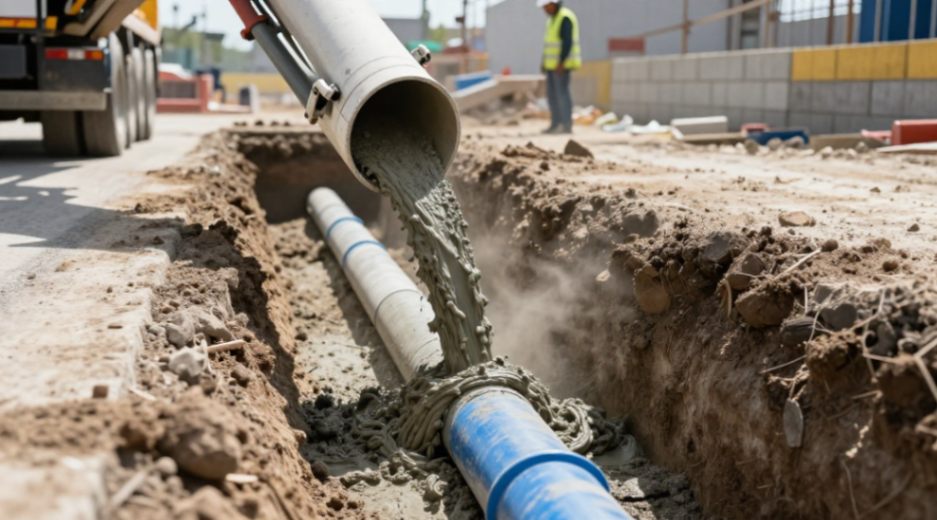
Forget the back-breaking labor of compacting soil in tight spaces. Non-structural lightweight concrete for backfill is a fluid, low-density material that flows into place and hardens into a stable, low-pressure mass. We use it to fill utility trenches, voids behind retaining walls, and around bridge abutments. It solves three big problems: inconsistent compaction, high lateral pressure on structures, and slow project timelines.
What Makes This Material Work
This isn’t your standard sidewalk mix. The magic is in the aggregates. We replace heavy gravel with lightweight materials like expanded shale, clay, or slate. Sometimes we use recycled glass or engineered foam beads. The result is a concrete that weighs 50% to 75% less than standard fill. It still needs adequate compressive strength for backfill duty-typically 50 to 200 psi-but its true strength lies in its low density and flowability.
Core Properties You Can Count On
Think of three key traits. First, controlled low density. This directly reduces the load and lateral earth pressure on underground pipes and walls. Second, high flowability. The mix pours like thick pancake batter, filling every irregular cavity without mechanical compaction. Third, it’s self-levelling. You get a uniform, void-free result every time.
Step-by-Step: How to Specify and Use It
Step 1: Define the Project Need
First, identify the pain point. Is it a deep, narrow trench where compaction equipment won’t fit? Is it an area adjacent to a sensitive underground structure that can’t handle high pressure? Is the native soil poor and prone to settlement? If you answered yes, lightweight concrete backfill is your solution.
Step 2: Nail the Mix Design
Work with your ready-mix supplier. You’re not ordering a standard bag mix. Specify the target plastic density (often between 90 and 120 lbs/cu ft) and the required compressive strength. The water content is critical-enough for flow, but not so much that it causes segregation. A good mix will have a slump of 8 inches or more. Admixtures for air-entrainment and water reduction are common.
Step 3: Master Placement Techniques
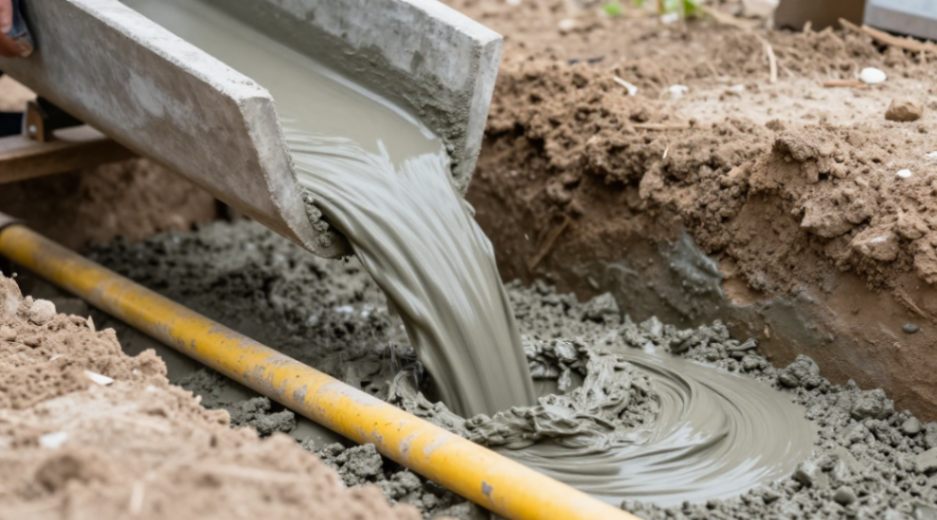
The process is simple but requires forethought. First, prepare the excavation. Remove debris and standing water. If the soil is very dry, dampen it to prevent moisture theft from the concrete. Second, place the concrete. Use a chute or pump directly from the truck. Let it flow and seek its own level. Do not vibrate or tamp it. The material will encapsulate and protect utilities without damaging them.
Step 4: Manage Curing and Return to Service
This material gains strength slowly. Keep it moist for at least 72 hours if possible. Traffic can usually return over it within 24 to 48 hours for pedestrian and light vehicle loads. Full design strength takes about 7 days. The beauty is zero settlement. You can pave or build over it immediately after it gains sufficient handling strength.
Weighing the Real Costs and Benefits
Yes, the material cost per cubic yard is higher than compacted soil. That’s the upfront sticker shock. Now, run the real numbers. Eliminate these costs: compaction equipment rental, dedicated labor for compaction and testing, and imported select fill material. Add these savings: drastically faster placement, zero rework for failed density tests, and reduced risk of future settlement damage. For most constrained or critical sites, the total installed cost is lower. The long-term liability is virtually zero.
Environmental and Long-Term Advantages
This is a durable, permanent fill. It does not erode, wash away, or settle. It provides moderate thermal insulation, a bonus for buried utilities. Many mixes incorporate industrial by-products like fly ash or recycled glass, reducing the carbon footprint. You’re not just backfilling a hole; you’re installing a permanent, low-impact, high-performance geologic element.
When to Choose It Over Other Options
Compare it to two common alternatives. Versus compacted aggregate: lightweight concrete wins on speed, uniformity, and reduced pressure. Versus controlled low-strength material (CLSM or “flowable fill”): lightweight concrete is specifically engineered for lower density. Standard CLSM is often weight-comparable to soil. Choose lightweight concrete when low density is the primary goal-protecting structures from pressure.
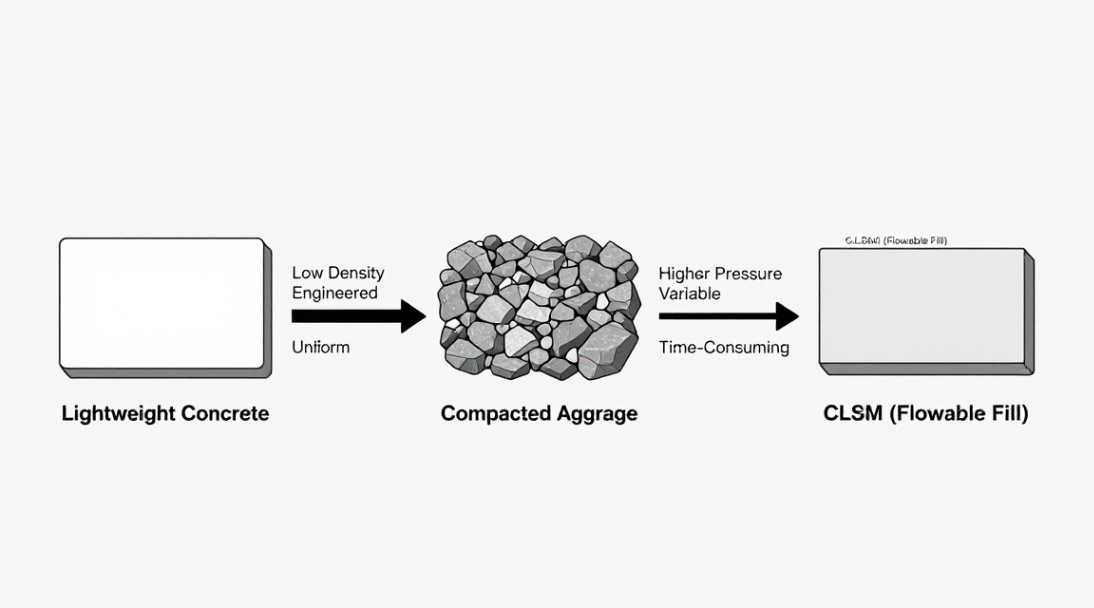
The decision is logical. For routine, open areas with good soil, compacted fill is economical. For general utility backfill where density isn’t critical, standard CLSM is excellent. But for trenches next to foundations, behind retaining walls, or under sensitive slabs, non-structural lightweight concrete is the definitive, problem-solving choice. It turns a variable, labor-intensive process into a predictable, high-quality result.
We are the global leader in lightweight concrete and advanced engineered foam solutions. Known globally for its commitment to research, innovation, and applied expertise, we have been providing engineered foam solutions since the early 2012’s.
We can supply high-quality concrete admixture and foam concrete related products all over the world.
The company has a professional technical department and quality supervision department, a well-equipped laboratory, and equipped with advanced testing equipment and after-sales customer service center.
If you are interested, please feel free and contact us.