Professional solutions on concrete addtives, Concrete Foaming Agent, Superplasticizer, CLC Blocks Additives, and foaming machine

AAC Block Specifications: The 5 Costly Oversights That Sink Your Project
The Silent Crisis in AAC Specifications
A 2023 industry audit found that nearly 40% of project failures involving aerated autoclaved concrete AAC block specifications stemmed not from the material itself, but from a fundamental misunderstanding of its governing parameters. The most common culprit? A dangerous assumption that AAC is simply a lighter brick.
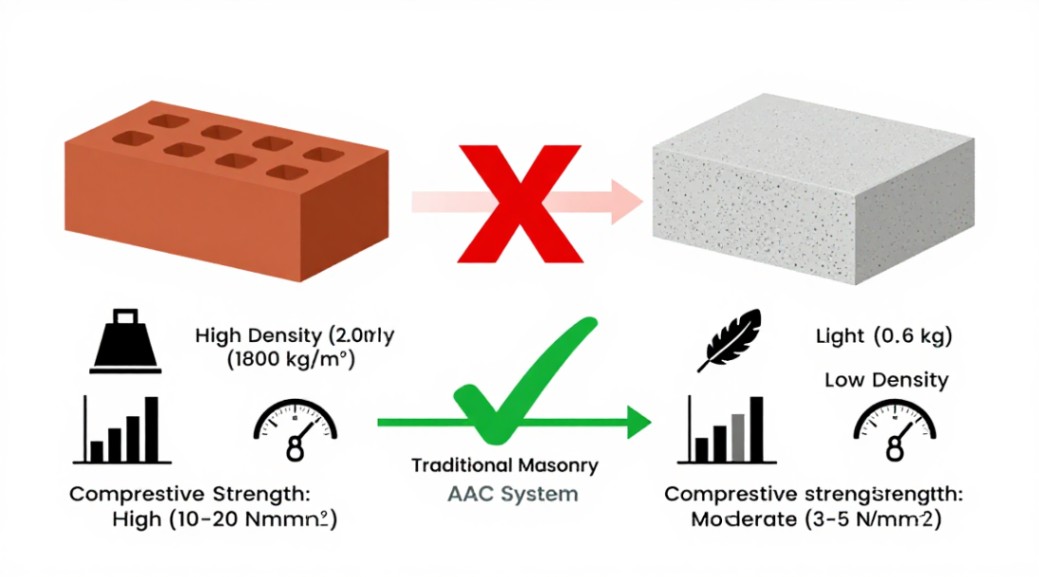
This is a critical error. AAC possesses a unique cellular structure from the autoclaving process, making its specifications non-negotiable. Ignoring them courts disaster.
The Density Deception: Why ‘Lighter’ Isn’t Always Better
The first warning sign is a focus on weight alone. AAC blocks come in standard density classes-typically 400, 500, 600, and 700 kg/m3. Each class has a defined purpose. A common mistake is using a lower-density block (400-500 kg/m3) for a load-bearing wall simply because it’s lighter and cheaper. The result? Compressive strength fails. Walls crack. Structural integrity vanishes. On Reddit’s construction forums, a recurring complaint from homeowners is, “My AAC wall cracked under a simple beam load.” The post-mortem almost always points to a grade mismatch: using an insulation-grade block for a structural application. Understand this: density dictates strength, thermal conductivity, and sound insulation. Specifying the wrong one guarantees failure.
Thermal Performance: The ‘R-Value’ Mirage
Never accept a generic R-value claim. AAC’s thermal resistance depends directly on its dry density. A 400 kg/m3 block will have a significantly better insulation value (lower Lambda) than a 700 kg/m3 block. Many builders fall into the trap of using a single, mid-range R-value for all calculations. This leads to under-insulated buildings, high HVAC costs, and occupant discomfort. The true specification is the declared thermal conductivity (λD) according to standards like EN 1745 or ASTM C1693. Demand this data. Do not proceed without it.
The Moisture Management Mandate
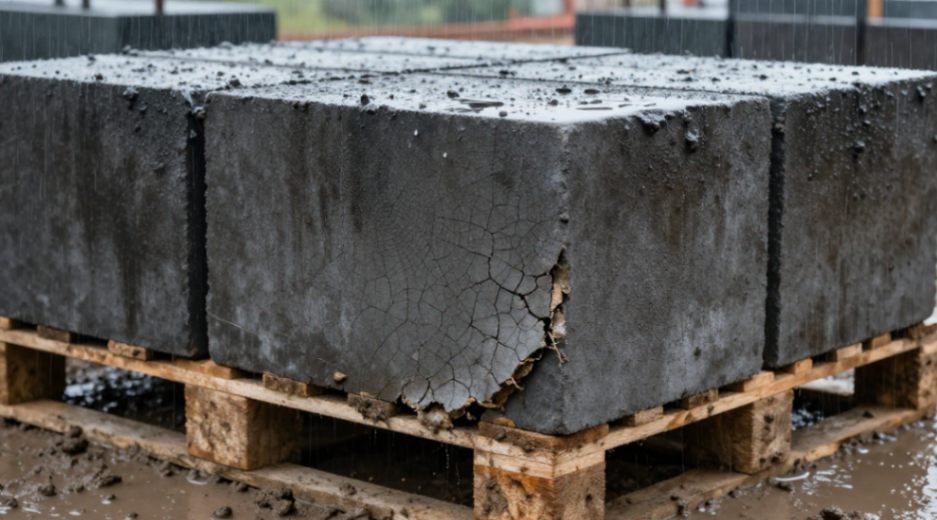
This is the most catastrophic oversight. AAC is hydrophilic. It absorbs water. Specifications for moisture content at the time of laying are not suggestions; they are survival guides. Installing blocks with high moisture content, or failing to protect them from rain, leads to dimensional changes as they dry. Mortar bonds break. Crazing appears. Worse, in freezing climates, absorbed water expands, spalling the surface. The correct procedure is explicit in all major standards: protect AAC from saturation before and during installation. This isn’t a minor detail. It’s the line between a durable wall and a crumbling liability.
Compressive Strength: The Grade That Matters
Do not confuse density with compressive strength. They correlate, but they are not the same. You must specify by the strength grade (e.g., AAC 3.5, AAC 5.0 per EN 771-4), which represents the minimum compressive strength in N/mm2. Using a block with insufficient strength for your calculated loads is a fundamental engineering failure. For multi-story construction or load-bearing applications, this specification is paramount. Always verify the manufacturer’s test certificates for the specific production batch. Do not rely on catalogue values alone.
Dimensional Tolerance: The Hidden Cost of ‘Close Enough’
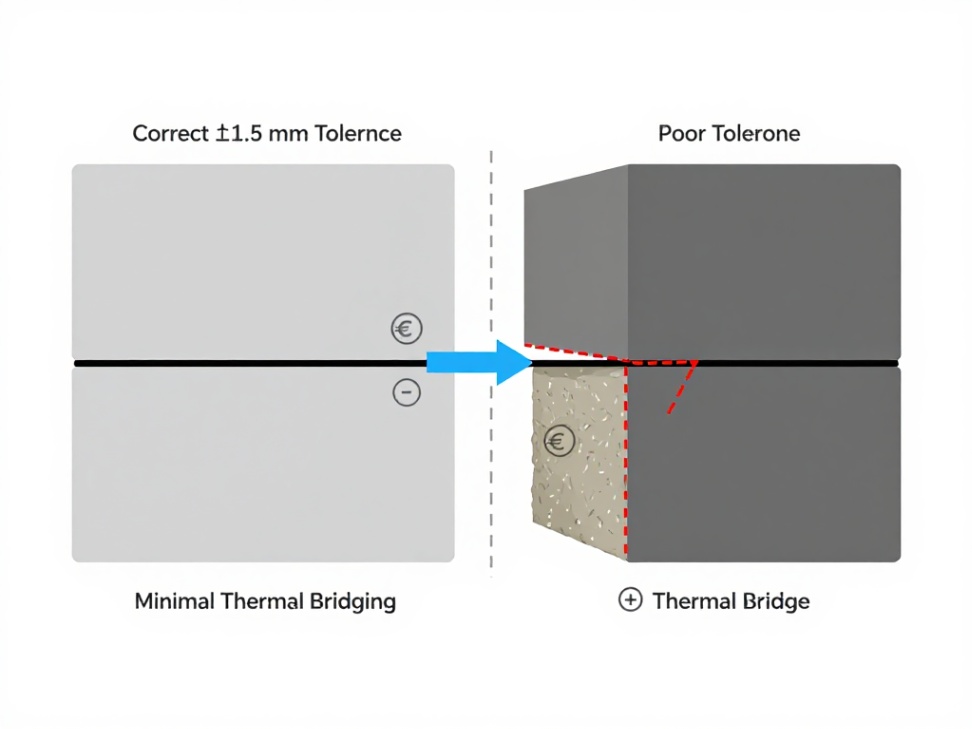
Finally, tolerances. AAC blocks are precision-manufactured. Standard tolerances for length, height, and width are typically ±1.5 to 3 mm. Ignoring this and using blocks with poor dimensional stability forces masons to use excessive mortar to level courses. This creates thick, thermal bridging mortar joints that defeat the very purpose of AAC’s insulation. It increases material costs, labor time, and compromises the wall’s thermal and structural uniformity. Insist on blocks that meet Category I tolerances as defined in the relevant standards. The savings in thin-layer mortar and reduced labor will far outweigh any minor upfront cost difference.
The path forward requires vigilance. Start by demanding a comprehensive product data sheet that lists all key parameters: dry density, compressive strength grade, declared thermal conductivity, drying shrinkage, and moisture content. Cross-reference these with your project’s structural and energy models. Consult with a structural engineer experienced in AAC design. For complex projects, consider using a dedicated AAC block adhesive system designed for precise application and minimal thermal bridging, which can mitigate installation risks associated with poor workmanship. Treat the specifications for aerated autoclaved concrete AAC block specifications as your project’s legal code. Deviate from them at your own peril.
We are the global leader in lightweight concrete and advanced engineered foam solutions. Known globally for its commitment to research, innovation, and applied expertise, we have been providing engineered foam solutions since the early 2012’s.
We can supply high-quality concrete admixture and foam concrete related products all over the world.
The company has a professional technical department and quality supervision department, a well-equipped laboratory, and equipped with advanced testing equipment and after-sales customer service center.
If you are interested, please feel free and contact us.