Professional solutions on concrete addtives, Concrete Foaming Agent, Superplasticizer, CLC Blocks Additives, and foaming machine

Liquid Sodium Silicate for Concrete Hardening: The Definitive Pros and Cons Guide
Direct Conclusion: When to Choose Liquid Sodium Silicate
Select liquid sodium silicate for concrete hardening when you require an economical, breathable treatment to increase surface hardness and dust-proof an interior, non-decorative concrete slab. Choose an alternative sealer if you need stain resistance, a glossy finish, or are treating exterior concrete subject to freeze-thaw cycles.
The Chemistry and Mechanism of Action
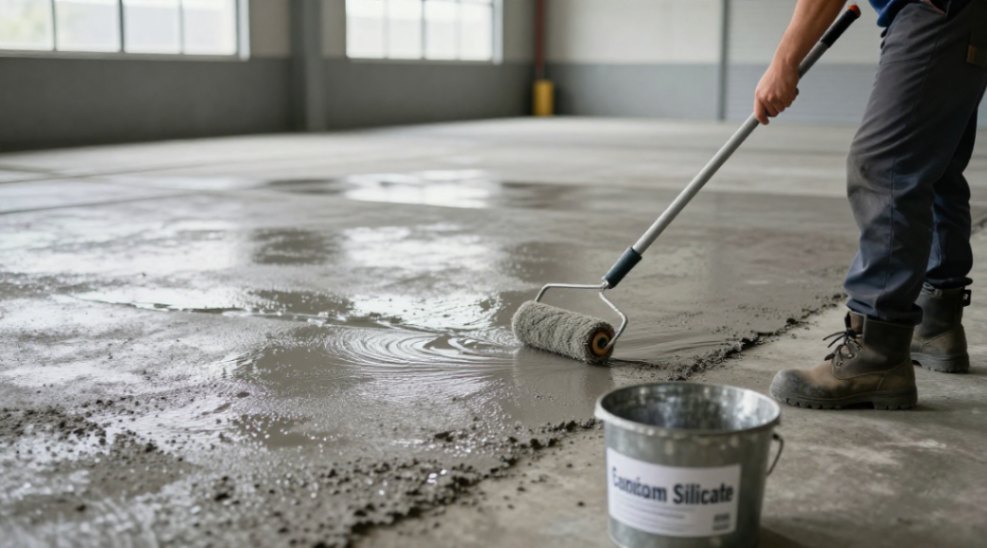
Liquid sodium silicate is an alkaline solution of sodium oxide (Na2O) and silicon dioxide (SiO2). Its primary function in concrete treatment is a pozzolanic reaction. The solution penetrates the surface and reacts with free calcium hydroxide (portlandite), a byproduct of cement hydration. This reaction forms additional calcium silicate hydrate (C-S-H) gel, the same binder that gives concrete its strength.
This newly formed C-S-H gel fills microscopic pores and capillaries within the cement matrix. The result is a denser, less permeable surface. The process does not coat the surface; it modifies the concrete‘s chemistry from within the first few millimeters.
Comparative Analysis: Sodium Silicate vs. Other Hardening Methods
The choice between hardening agents is critical. This comparison uses objective data from laboratory tests and decades of field application feedback.
| Treatment Type | Core Advantages | Key Limitations | Ideal Application Scenario |
|---|---|---|---|
| Liquid Sodium Silicate | Lowest material cost. Excellent dust-proofing. Increases surface hardness (Mohs 6-7). Maintains slab breathability. Simple application. | No stain or chemical resistance. Can leave a white hazy residue if over-applied. Not for exterior use in freeze-thaw regions. Zero gloss enhancement. | Industrial warehouses, manufacturing floors, interior garage slabs, and any interior slab where cost-effective hardness/dust control is the sole priority. |
| Lithium Silicate | Higher reactivity, less prone to efflorescence or mottling. Often provides slightly higher surface hardness. Compatible with some decorative treatments. | Material cost is 3-5x higher than sodium silicate. Similar lack of stain resistance. | High-end commercial spaces where a cleaner, more consistent result is critical, or for treating older concrete with lower free lime content. |
| Reactive Acrylic or Silane/Siloxane Sealers | Provides water repellency and mild stain resistance. Allows vapor transmission (breathable). Good for exterior vertical surfaces. | Does not significantly increase surface hardness. Primarily a water proofer, not a hardener. | Exterior walls, parking decks, or slabs where water ingress is the primary concern, not abrasion resistance. |
| Epoxy or Urethane Coatings | Superior chemical and abrasion resistance. High-gloss finish. Excellent stain protection. Creates a thick, continuous film. | High cost and labor intensity. Can delaminate if moisture vapor transmission is high. Not breathable. Requires meticulous surface preparation. | Food/beverage plants, chemical processing areas, automotive shops requiring stain resistance, and high-traffic retail floors. |
Community Feedback on Performance
Many flooring contractors on professional forums and subreddits like r/Concrete consistently highlight the cost-benefit ratio of liquid sodium silicate. Feedback often states: “For a basic warehouse grind and harden, sodium silicate gets the job done at a fraction of the price of lithium.” A common critique is the potential for a blotchy appearance if the concrete’s moisture content or chemistry varies across the slab, which is less frequent with lithium-based products.
Detailed Application Process and Specifications
Success depends on precise execution. Deviations cause poor performance or aesthetic flaws.
1. Surface Preparation
Preparation is non-negotiable. The concrete must be clean, sound, and open. For existing slabs, this requires mechanical profiling via diamond grinding or shot blasting to remove contaminants, laitance, and old coatings. The surface profile should be a CSP 2-3 (Concrete Surface Profile). For new concrete, a minimum 28-day cure is mandatory. Ensure the surface is completely dry; moisture content should not exceed 5.0% per ASTM F2170 using an in-situ probe.
2. Product Dilution and Application
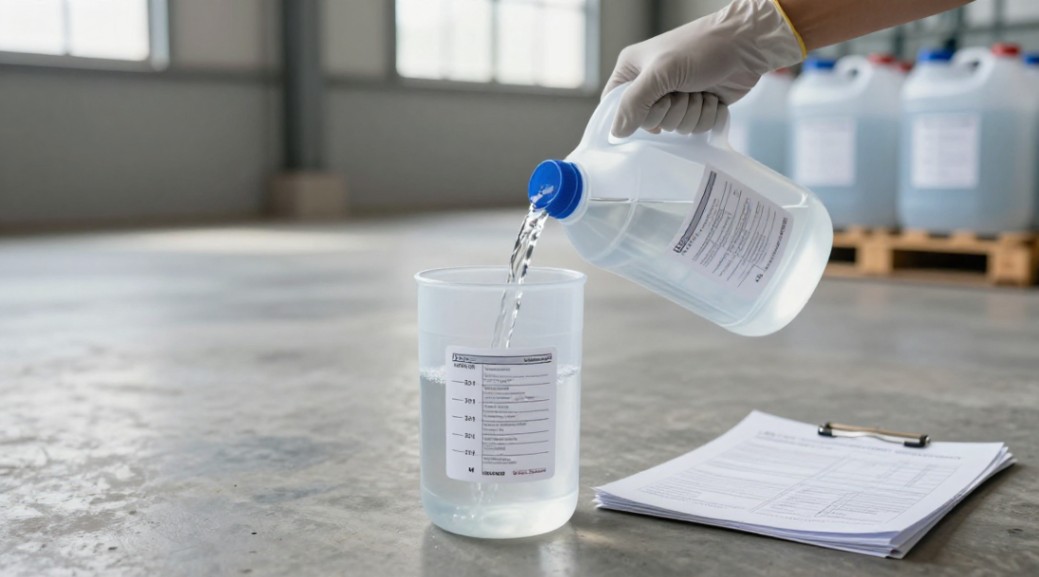
Dilution rates vary by product concentration. A typical industrial-grade solution (ratio ~ 3.22 SiO2:Na2O) is diluted 1:1 with clean, potable water. Always consult the manufacturer’s technical data sheet (TDS).
| Step | Action | Specification / Tool |
|---|---|---|
| Mixing | Dilute concentrate with water in a clean plastic container. Stir thoroughly. | 1 part silicate to 1 part water (by volume). Use a low-speed mechanical mixer for 2 minutes. |
| Application Method | Apply evenly using a low-pressure sprayer, microfiber mop, or soft-bristle squeegee. | Garden sprayer (1.0-1.5 gallon capacity) or a string mop. Do not use a roller. |
| First Coat | Apply until the surface is uniformly wet without pooling. Allow complete penetration. | Coverage Rate: 150-200 sq ft per gallon of diluted solution. |
| Dwell Time | Allow the solution to react and penetrate. The surface will change from wet to damp to dry. | 15-45 minutes, depending on ambient temperature and humidity. |
| Second Coat | Apply a second coat perpendicular to the first direction if the concrete absorbs it readily. | Same coverage rate. Many slabs only require one coat if properly prepared. |
| Residue Removal | After final penetration (a sticky/tacky feel), remove any unreacted residue. | Use a clean microfiber mop or an auto-scrubber with clean water. Buff dry. |
Limitations, Safety, and Longevity
Understanding the boundaries of the technology prevents misuse.
Key Limitations: The treatment is not a sealant. It offers zero resistance to oil, grease, or chemical stains. It will not darken or enhance the concrete’s color uniformly; in fact, it can create a light, matte haze. It is strictly for interior use. Exterior application can trap moisture, leading to spalling during freeze-thaw cycles.
Safety and Handling
Liquid sodium silicate is alkaline (pH ~11-12.5). Wear chemical-resistant gloves, safety goggles, and protective clothing. Ensure adequate ventilation. In case of skin contact, wash immediately with plenty of water. Contain and neutralize spills with a mild acid like vinegar, then rinse.
Maintenance and Longevity
The reaction is permanent. The increased hardness and dust-proofing will last for the life of the concrete surface, as it is a chemical change, not a coating. Maintenance involves regular sweeping and damp mopping. For heavy traffic areas, periodic burnishing with a high-speed floor machine can maintain a polished appearance. The treated surface remains breathable, preventing moisture-related failure from below.
Final Recommendation and Use Cases
Specify liquid sodium silicate for concrete hardening for large-scale, cost-driven projects where the performance requirements are clearly defined as increased abrasion resistance and dust control. Its niche is raw industrial functionality.
- Ideal Use Cases: Distribution warehouses, manufacturing facilities, bulk storage areas, parking garages (interior, non-weather-exposed), and residential basements/garages seeking a basic, durable finish.
- Non-Ideal Use Cases: Retail spaces, restaurants, automotive service bays (due to stains), exterior patios or driveways, and any decorative polished concrete project where color consistency is paramount.
For your next project, base your specification on this hierarchy of needs: hardness and dust control only (choose sodium silicate), a cleaner reaction with higher performance (choose lithium silicate), or requiring stain/chemical protection (choose a film-forming coating like epoxy). Test the product on a small, inconspicuous area of your slab first to confirm visual and performance expectations.
We are the global leader in lightweight concrete and advanced engineered foam solutions. Known globally for its commitment to research, innovation, and applied expertise, we have been providing engineered foam solutions since the early 2012’s.
We can supply high-quality concrete admixture and foam concrete related products all over the world.
The company has a professional technical department and quality supervision department, a well-equipped laboratory, and equipped with advanced testing equipment and after-sales customer service center.
If you are interested, please feel free and contact us.